
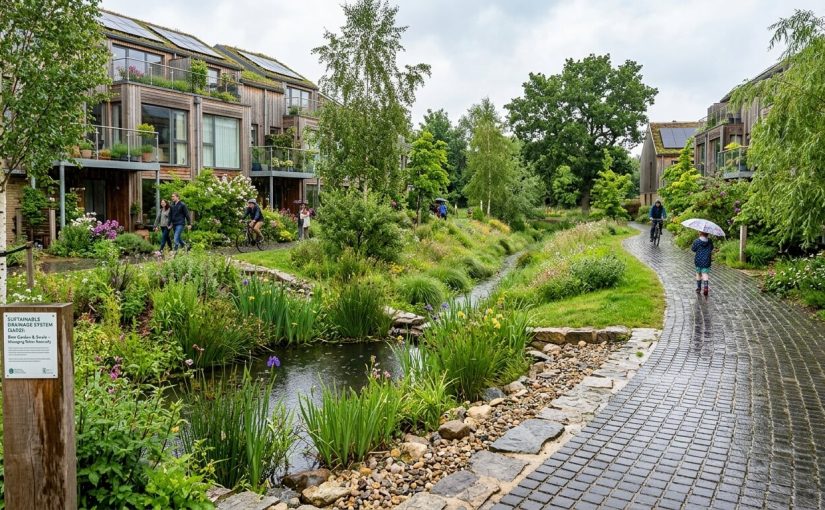
For decades, the standard approach to dealing with rainwater on a building site was simple and, frankly, a bit shortsighted. The goal was to get water off the land as quickly as possible, usually through a network of underground pipes that dumped the runoff directly into the local sewer system. While this worked for the individual site in the short term, it created a massive headache for everyone else. As more land was paved over and urban areas expanded, the sheer volume of water entering the sewers during heavy storms began to overwhelm the infrastructure, leading to flash flooding and pollution in our rivers.
This is where a modern approach becomes essential. Instead of fighting against nature by trying to outrun the rain, we are now seeing a shift towards mimicking natural processes. This shift is codified in the requirement for a comprehensive SuDS Strategy. This isn’t just a technical hurdle to clear; it is a fundamental change in how we view the relationship between the built environment and the water cycle. By slowing the water down, cleaning it, and allowing it to soak back into the ground where possible, we create developments that are more resilient to the changing climate.
The four pillars that hold a strategy together
A truly effective strategy for sustainable drainage isn’t just about sticking a big crate in the ground to hold water. To be accepted by local authorities and to actually provide value to a project, it needs to address four key areas. These are often referred to as the four pillars of SuDS, and they ensure that the drainage system is doing more than just preventing puddles.
- Water Quantity: This is the most obvious one. The system must control the amount of water leaving the site to ensure it doesn’t exceed the capacity of the receiving watercourse or sewer. This involves calculating runoff rates and providing enough storage to handle even the most extreme storm events.
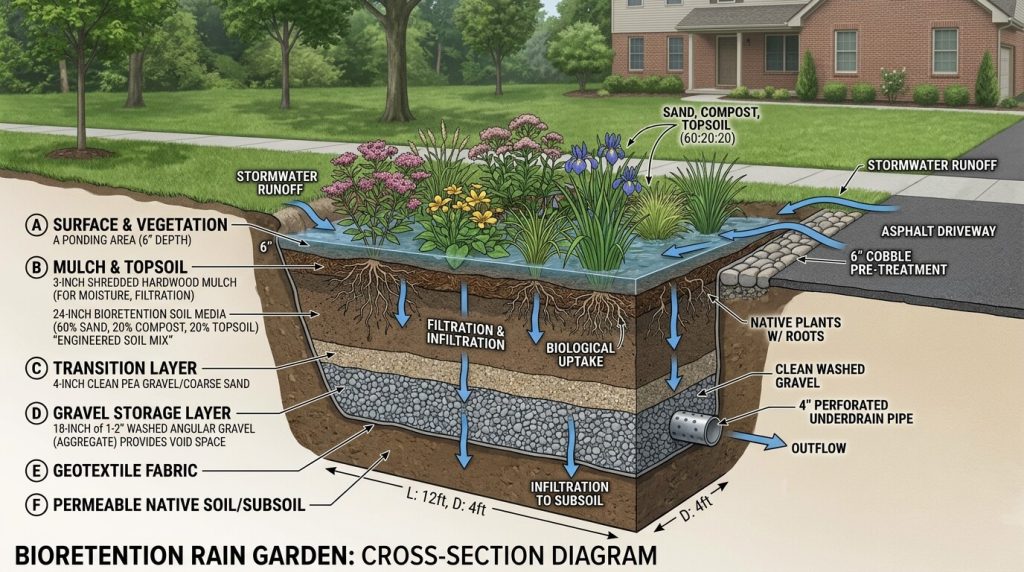
- Water Quality: Rainwater picking up oil from car parks or chemicals from industrial roofs can be highly polluting. A good strategy includes stages of treatment—like swales or reed beds—that naturally filter out these pollutants before the water is discharged.
- Amenity: Water shouldn’t just be hidden away. When integrated properly, drainage features can create beautiful, usable spaces for residents and the public. Think of ponds that act as focal points in a park or green roofs that provide a bit of nature in a concrete jungle.
- Biodiversity: By creating wet and dry habitats, sustainable drainage can significantly boost the local ecology. This is increasingly important as developers are now required to demonstrate a biodiversity net gain on their sites.
How the planning process views your drainage plans
If you are looking to develop land in the UK, you will likely have encountered the Lead Local Flood Authority (LLFA). These bodies are responsible for managing local flood risk, and they take a very keen interest in your proposed drainage solutions. In fact, for most major developments, a detailed SuDS Strategy is a mandatory requirement for planning approval. Without one, your application is likely to be delayed or even rejected outright.
The LLFA wants to see that you have followed the drainage hierarchy. This is a set of priorities that dictates how you should dispose of surface water. The first choice should always be to allow the water to soak into the ground (infiltration). If the ground conditions don’t allow for that—perhaps because of heavy clay or contaminated soil—the next step is to discharge to a watercourse. Only when both of those options are proven to be unfeasible can you look at discharging into a surface water sewer, and even then, the rate of discharge will be strictly limited to ‘greenfield’ rates.
By engaging with these requirements early in the design process, you can avoid costly redesigns later on. It is much easier to design a site around a pond or a swale than it is to try and squeeze one in after the building layout has already been finalised. A proactive approach shows the planners that you are serious about sustainability and that you have considered the long-term impact of your development on the surrounding area.
Choosing the right tools for the job
Every site is different, which means every strategy needs to be bespoke. There is no one-size-fits-all solution when it comes to sustainable drainage. An urban infill site with very little open space will require a completely different set of tools compared to a large residential development on the edge of a town. The beauty of a well-thought-out plan is that it uses a ‘management train’—a series of different features that work together to manage the water.
- Permeable Paving: This allows water to soak through the surface of car parks and driveways into a sub-base below, where it can be stored or filtered.
- Green Roofs: These are fantastic for absorbing the first flush of rain and reducing the overall volume of runoff, while also providing insulation for the building.
- Swales and Detention Basins: These are shallow, landscaped depressions that can hold water during a storm and allow it to slowly drain away or evaporate.
- Attenuation Tanks: When space is at a premium, underground tanks can store large volumes of water, though these are often seen as a last resort because they don’t offer the same biodiversity or amenity benefits as surface-level features.
Dealing with difficult site conditions
One of the most common challenges when developing a drainage plan is dealing with less-than-ideal ground conditions. Many parts of the UK sit on heavy clay, which has very poor infiltration rates. In these scenarios, the strategy has to shift focus from soaking water away to storing it and releasing it slowly. This requires careful hydraulic modelling to ensure that the storage provided is sufficient for the specific rainfall patterns of the area.
Contaminated land also presents a significant hurdle. You cannot simply allow water to soak into ground that contains pollutants, as this could lead to groundwater contamination. In these cases, the drainage system must be lined to prevent any infiltration, and the focus shifts entirely to treatment and controlled discharge. This is where the expertise of a drainage engineer becomes invaluable, as they can navigate these complexities and find a solution that satisfies both the environmental regulators and the local planning authority.
The importance of thinking about the long term
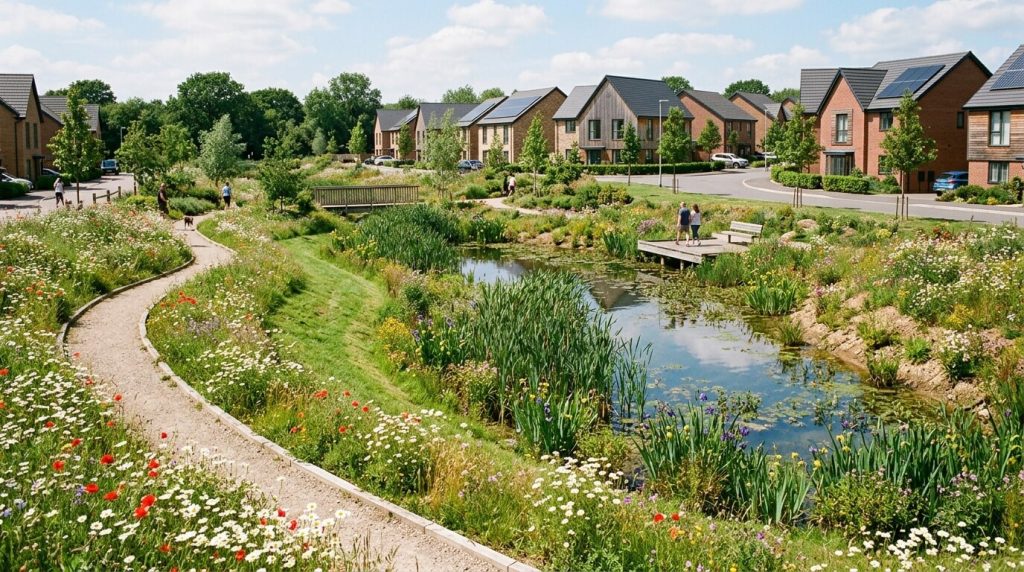
A SuDS Strategy is not just a document for the planning phase; it is a roadmap for the lifetime of the development. One aspect that is often overlooked in the early stages is maintenance. For a sustainable drainage system to continue working effectively, it needs to be looked after. This might involve regular mowing of swales, clearing debris from inlets and outlets, or periodically vacuuming permeable paving to prevent it from clogging.
Planners now frequently require a detailed maintenance schedule as part of the strategy. They want to know who will be responsible for the upkeep of the system and how it will be funded. Whether it is a private management company or the local water authority taking ownership, having a clear plan in place ensures that the system doesn’t fail a few years down the line. A well-maintained system not only protects the site from flooding but also ensures that the aesthetic and ecological benefits are preserved for the residents and the wider community for decades to come.

Sophie writes about local history and community stories, emphasizing the people, places, and events that make towns special.